
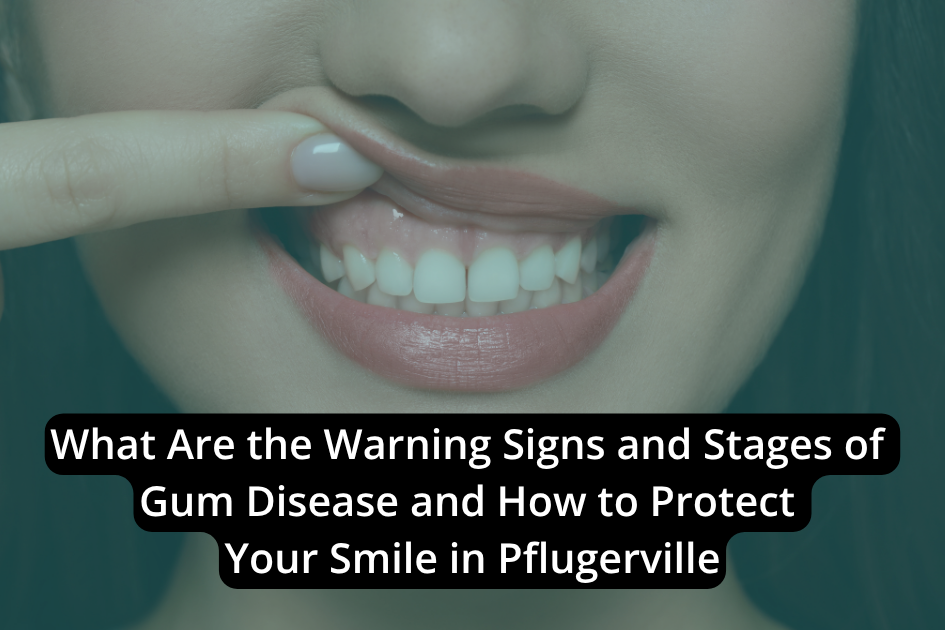
What Are the Warning Signs and Stages of Gum Disease and How to Protect Your Smile in Pflugerville
Most people spend a lot of time thinking about their teeth and very little time thinking about their gums. That is a problem, because your gums are the foundation everything else sits on. Without healthy gum tissue and bone supporting your teeth, even the most beautiful smile can fall apart over time. This September, in honor of National Gum Care Month, Pecan St. Dental wants to help Pflugerville patients understand what gum disease is, how to recognize it early, and what to do before it becomes a serious issue.
September Is National Gum Care Month, and Your Gums Deserve Attention
September is designated as National Gum Care Month across the country, and the reason is simple: gum disease is far more common than most people realize. Research shows that nearly half of American adults over the age of 30 have some form of periodontal disease, and many of them have no idea. Gum disease is largely painless in its early stages, which means it can quietly progress for months or even years before a patient notices anything is wrong. That’s why awareness matters, and why this month is the perfect time to take a closer look at your gum health.
What Is Gum Disease and How Does It Start
Gum disease, also known as periodontal disease, is an infection of the tissues that surround and support your teeth. It does not happen overnight. It starts with plaque, the sticky film of bacteria that forms on your teeth and along your gum line every single day. When plaque is not removed consistently through brushing and flossing, it hardens into tartar, a rough calcified deposit that cannot be removed with a toothbrush alone. As tartar accumulates along the gum line, the surrounding tissue becomes irritated and inflamed. That inflammation is where gum disease begins, and left unchecked, it only gets worse.
The Two Stages of Gum Disease – Gingivitis and Periodontitis
Understanding how gum disease progresses helps you appreciate why catching it early is so important. There are two main stages, and the difference between them is significant.
Gingivitis – The Early and Reversible Stage
Gingivitis is the earliest stage of gum disease, and the good news is that it is completely reversible with the right care. At this stage, the gums become inflamed in response to plaque and bacteria building up along the gum line. You may notice that your gums look redder than usual, feel tender when you touch them, or bleed when you brush or floss. Many people assume that a little bleeding during brushing is normal. It is not. Bleeding gums are one of the clearest signals your body can send that something is wrong. The encouraging thing about gingivitis is that no bone or tissue loss has occurred yet, meaning a professional cleaning combined with improved home care habits can fully reverse the damage.
Periodontitis – The Advanced Stage
When gingivitis is left untreated, it progresses into periodontitis, the more serious and destructive stage of gum disease. At this point, the infection moves deeper below the gum line. The gums begin to pull away from the teeth, creating pockets where bacteria can accumulate and continue breaking down the supporting structures of the tooth. Over time, the bone and connective tissue that hold your teeth in place begin to deteriorate. Teeth may feel loose, shift position, or eventually be lost altogether. Periodontitis is the single leading cause of tooth loss in adults, and it requires more intensive professional treatment to manage. The further it progresses, the more complex the treatment becomes, which is why early intervention is always the better path.
Warning Signs You May Already Have Gum Disease
Because gum disease develops quietly, knowing what to look for is one of the most valuable things you can do for your oral health. The following symptoms are all worth taking seriously and discussing with Dr. Prab Singh at your next visit.
Gums that bleed during brushing or flossing are one of the earliest and most reliable warning signs of gingivitis. Persistent bad breath that does not go away even after brushing is another common indicator, as the bacteria involved in gum disease produce compounds that cause ongoing odor. Red, swollen, or puffy gum tissue that looks different from its usual pale pink color signals active inflammation. Gums that appear to be receding or pulling away from the teeth, making your teeth look longer than before, suggest that disease is already progressing. Teeth that feel loose or have shifted, or pain when chewing, can indicate more advanced bone loss. If any of these symptoms sound familiar, do not wait to schedule an evaluation.
The Connection Between Gum Disease and Your Overall Health
The impact of gum disease does not stop at your gum line. Decades of research have established a meaningful connection between periodontal disease and serious systemic health conditions. When the gum tissue is infected and inflamed, the bacteria involved can enter the bloodstream and travel to other parts of the body. Studies have found associations between untreated gum disease and increased risk of heart disease, stroke, diabetes complications, and respiratory problems. For patients who already have diabetes, gum disease can make blood sugar levels harder to control, creating a cycle that worsens both conditions. This is why periodontal care at Pecan St. Dental is about far more than just protecting your teeth. It is an important part of taking care of your whole body.
Who Is at Higher Risk for Gum Disease
While gum disease can affect anyone, certain factors increase the likelihood of developing it. Adults over 30 face a significantly higher risk simply due to age and the cumulative effects of years of plaque exposure. People with diabetes are more susceptible because the condition affects the body’s ability to fight infection. Hormonal changes during pregnancy can make gums more sensitive and reactive to plaque, increasing the risk of pregnancy gingivitis. A family history of periodontal disease also plays a role, as genetics can influence how your body responds to bacteria. Patients who take medications that cause dry mouth are at higher risk because saliva plays an important role in naturally rinsing away bacteria throughout the day. Anyone who skips regular professional cleanings and exams is at greater risk regardless of how well they brush at home.
How Pecan St. Dental Treats Gum Disease in Pflugerville
At Pecan St. Dental, gum disease treatment begins with a thorough evaluation. Dr. Prab Singh uses advanced diagnostic tools including digital X-rays and intraoral cameras to assess your gum tissue and measure the depth of any pockets that have formed between your teeth and gums. For patients in the early gingivitis stage, a professional cleaning to remove plaque and tartar buildup above the gum line is often sufficient to reverse the disease when paired with improved home care habits. For patients with more advanced periodontitis, scaling and root planing is the recommended treatment. This is a deep cleaning procedure that removes bacteria and hardened deposits from below the gum line and smooths the surface of the tooth root so that the gum tissue can reattach properly. Dr. Prab Singh develops a personalized periodontal care plan for every patient based on the severity of their condition, with follow-up monitoring to track healing and prevent recurrence.
How to Keep Your Gums Healthy at Home
Professional care and good daily habits work together, and neither one is fully effective without the other. Brush your teeth twice a day for two full minutes each time, giving careful attention to the area right along the gum line where plaque tends to accumulate. Floss every day without exception, as flossing is the only way to clean the spaces between teeth and just below the gum line where your toothbrush simply cannot reach. An antibacterial mouthwash used once daily can help reduce the bacterial load in your mouth between brushing sessions. Drink plenty of water throughout the day to support healthy saliva production. A balanced diet that limits sugary and processed foods also helps keep bacteria under control. And schedule your professional cleanings and exams every six months so that any early signs of gum disease can be caught and addressed before they progress.
Do Not Wait Until It Hurts – Schedule Your Periodontal Exam at Pecan St. Dental
Gum disease earns its reputation as a silent condition because so many patients do not realize they have it until it has already done real damage. The absence of pain is not a sign that your gums are healthy. By the time most people feel discomfort, gum disease has often already moved well past the reversible stage. The best thing you can do for your long-term oral and overall health is to come in for a periodontal evaluation at Pecan St. Dental and know exactly where you stand. Dr. Prab Singh and the entire team in Pflugerville are committed to providing personalized, compassionate care in a comfortable environment. This National Gum Care Month, give your gums the attention they deserve and take the first step toward healthier, stronger gums that will support your smile for years to come.
